USA
USA 
|
| | | | LOGIN |
|
| | | | LOGIN |

| Save 10% With Code REVIVE2024 + an Extra 5% Off Orders $1000+ |
| With Code REVIVE2024 |
| Amyris |
| Anise Star |
| Aniseed |
| Basil (India) |
| Basil Organic |
| Benzoin (Resinoid) |
 | Bergamot Organic |
| | Bergamot - Bergaptene Free |
| | Bergamot (Calabrian) |
| | Bergamot (Natural Blend) |
| | Bergamot - Bergaptene Free (Natural Blend) |
| Blood Orange (Sicily) |
| Cajeput |
| Calamus Root |
| Camphor |
| Cardamom |
| Cardamom Organic |
| Carrot Seed (Steam) |
| Cassia |
| Cassia Organic |
| Catnip |
| Cedar Leaf (Thuja) |
| | Cedarwood (Atlas) |
| | Cedarwood (Himalayan) |
| | Cedarwood (Texas) |
| | Cedarwood (Virginian) |
| | Cedarwood (Atlas) Organic |
| | Chamomile German (Hungary) |
| | Chamomile German (Bulgaria) |
| | Chamomile German (Nepal) |
| | Chamomile German (Nepal) Organic |
| | Chamomile Roman (China) |
| | Chamomile Roman (France) |
| Cinnamon Leaf |
| Cinnamon Bark Organic |
| Cinnamon Leaf Organic |
| Cinnamon Bark (Madagascar) |
| Cinnamon Bark (Ceylon) |
| Citronella (Java) |
| Citronella Organic |
| Clary Sage (France) |
| Clary Sage Organic |
| Clementine |
| Clove Leaf Rectified (Indonesia) |
| Clove Bud (India) |
| Clove Bud (Indonesia) |
| Clove Bud Organic |
| Copaiba Balsam |
| Coriander - Seed |
| Coriander - Herb |
| Cypress Blue (Australia) |
| Cypress Organic |
| Elemi |
| | Eucalyptus (Radiata) |
| | Eucalyptus (Radiata) Organic |
| | Eucalyptus (Lemon) Organic |
| | Eucalyptus (Blue Mallee) Organic |
| | Eucalyptus (Globulus) Organic |
| | Eucalyptus (Blue Mallee) |
| | Eucalyptus Globulus 80/85% |
| | Eucalyptus Lemon (Brazil) |
| Fennel Sweet |
| Fennel Organic |
| Fir Balsam |
| Fir Needle (Siberian) |
| Fir Balsam Organic |
| Frankincense - Boswellia carterii |
| Frankincense - Boswellia serrata |
| Frankincense Organic |
| Geranium (Egyptian) |
| Geranium Organic |
| Ginger Organic |
| Ginger Root - Dried |
| Ginger Root - Fresh |
| Grapefruit Pink Organic |
| Grapefruit (White) |
| Grapefruit Pink (Natural Blend) |
| Grapefruit (Pink) |
| Helichrysum (Africa) |
| Helichrysum (Slovenia) |
| Helichrysum Organic |
| Ho Wood |
| Ho Wood Organic |
| Hyssop |
| Hyssop Organic |
| Juniper Berry (Hungary) |
| Juniper Berry (India) |
| Juniper Berry Organic |
| Laurel Leaf |
| Laurel Leaf Organic |
| Lavandin (Grosso) |
| Lavandin Grosso Organic |
| | Lavender Organic |
| | Lavender (Bulgaria) |
| | Lavender Population |
| | Lavender (France) |
| | Lavender 40/42 |
| | Lavender (Natural Blend) |
| Lemon (Argentina) |
| Lemon (Natural Blend) |
| Lemon (Sicily) |
| Lemon 5 Fold (Natural Blend) |
| Lemon 5 Fold |
| Lemon Organic |
| Lime - Key Lime |
| Lime - Key Lime (Natural Blend) |
| Lime Organic |
| Lime (Persian / Tahiti) |
| Lime (Natural Blend) |
| Litsea Cubeba |
| Litsea Cubeba Organic |
| Mandarin |
| Mandarin (Natural Blend) |
| Marjoram (Sweet) |
| Marjoram Organic |
| Melissa Leaf (Slovenia) |
| Melissa Leaf Organic |
| Melissa Leaf (Bulgaria) |
| | Myrrh |
| | Myrrh Indian (Resinoid) |
| Neroli (Egypt) |
| Niaouli |
| Nutmeg (India) |
| Nutmeg Organic |
| | Orange (Sweet) Organic |
| | Orange Bitter (Sicily) |
| | Orange (5 Fold) |
| | Orange (Sweet) |
| | Orange Bitter (Natural Blend) |
| Origanum Organic |
| Origanum (Origanum Vulgare) |
| Palmarosa |
| Palmarosa Organic |
| Palo Santo |
| Patchouli (Dark) |
| Patchouli (Light) |
| Patchouli Organic |
| Pepper Black |
| Pepper Black Organic |
| Peppermint (Japanese) |
| Peppermint (Supreme) |
| Peppermint Japanese Organic |
| Peppermint Supreme Organic |
| Petitgrain (Sicily) |
| Pine Scotch |
| Pine Organic |
| Pink Peppercorn |
| Ravintsara |
| Rose Geranium Organic |
| Rose Geranium - South African |
| Rosemary - ct Cineole (Tunisia) |
| Rosemary - ct Cineole (Tunisia) Organic |
| Rosemary - ct Cineole (Hungary) |
| Rosemary - ct Cineole (Morocco) |
| Rosemary - ct Camphor (Spain) |
| Rosemary - ct Cineole (Morocco) Organic |
| Rosewood (Natural Blend) |
| Rosewood (Peru) |
| Sage Dalmatian |
| Sage Organic |
| Sandalwood (Australian) |
| Sandalwood (East Indian) |
| Sandalwood Organic |
| Silver Fir Organic |
| Spanish Sage |
| Spearmint Organic |
| Spearmint 65% (India) |
| Spikenard |
| Spikenard Organic |
| Spruce - Black Organic |
| Spruce - Black |
| Spruce - Hemlock |
| Spruce - White |
| Tagetes (Egypt) |
| Tangerine (Natural Blend) |
| Tangerine 5 Fold (Natural Blend) |
| Tangerine |
| Tansy Blue |
| Tea Tree (China) Organic |
| Tea Tree - AAA (Australia) |
| Tea Tree (Lemon) |
| Tea Tree (Australia) Organic |
| Thyme (White) |
| Thyme Organic |
| Thyme Red |
| Vanilla Oleoresin - 10 Fold (India) |
| Vetiver |
| Vetiver Organic |
| Wintergreen (China) |
| Wintergreen (Nepal) Organic |
| Wintergreen (China) Organic |
| Wintergreen (Nepal) |
| Yarrow |
| Yarrow Organic |
| | Ylang Ylang #1 |
| | Ylang Ylang #2 |
| | Ylang Ylang #3 |
Certified Organics: This Certified Organic Oil is QAI Certified. The National Organic Program develops, implements, and administers national production, handling, and labeling standards for organic agricultural products. The QAI also accredits the certifying agents (foreign and domestic) who inspect organic production and handling operations to certify that they meet USDA standards.
Botanical Name: Mentha arvensis
Main Constituents:
L-menthol: 70 - 75%
Plant Part: Herb
Origin: India
Processing Method: Steam Distilled
Description / Color / Consistency: A thin, colourless pale yellow liquid.
Aromatic Summary / Note / Strength of Aroma: A top note with a strong aroma, Peppermint has a sharp, penetrating scent based on its high menthol content. The minty sweetness of the vapor makes it one of the most popular Essential Oils.
Blends With: Basil, Bergamot, Cajeput, Cedarwood, Eucalyptus, Lemon, Lime, Mandarin, Marjoram, Niaouli, Pine, Rosemary, and Thyme.
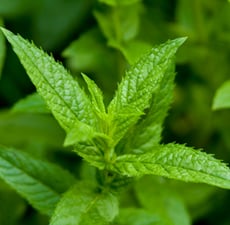
Product Abstract: Also known as Corn Mint, there are several species of the mentha arvensis, a perennial herb that can grow to 3 feet in height. It has hairy leaves with serrated edges and spiked purple flowers, and spreads by way of its underground runners. It is one of the oldest documented medicinal herbs. Peppermint Japanese is known for its high menthol content, and menthol crystals sometimes form right on the leaves. Peppermint's name has its roots in Greek mythology. Hades, god of the dead, pursued the beautiful nymphe, Minthe. Hades' wife, Persephone, became jealous and turned Minthe into a small and insignificant plant on which to be trampled. Pluto could not undo the transformation but ensured that Minthe would always be loved for her fragrant aroma. Peppermint is used as a flavouring agent in the food industry, and in soaps, candles and toiletries.
Note: Because of the very high menthol content of this oil, it may crystalize. If so, we would recommend placing the bottle in a very hot water bath, and changing the water frequently until it is back to its liquid state, then gently agitate before use.
Cautions: Dilute before use; for external use only. May cause skin irritation in some individuals; a skin test is recommended prior to use. Contact with eyes should be avoided.
FAQs:
Can You Apply Peppermint Oil Topically?
Yes. Peppermint oil can be applied to the skin for headaches, muscle aches, joint pain, and itching. Test a small amount to determine whether you have a specific allergy to peppermint oil.
Does Peppermint Oil Contain Menthol?
Yes, which is why you should not inhale the peppermint oil directly. You should also not put it on an infant’s face.
Can Peppermint Oil Be Diffused Safely?
Yes, diffused peppermint oil can lead to a boost in energy, help with respiration, stimulate circulation, improve mood, and alleviate stress. If infants or animals are present, use it in a well-ventilated space.
Does Peppermint Oil Work on Bug Bites?
Recent research has indicated that peppermint oil may be an anti-microbial, so it is a safe, natural way to prevent the spread of infection from bug bites.
What is the Strongest Peppermint Oil?
The most powerful peppermint oils are made from modern distillation techniques. New Direction Aromatics peppermint oil is steam distilled from the Mentha arvensis plant, making it among the strongest types of peppermint oil available on the market.
Is Peppermint Oil Good For You?
Peppermint oil has several applications and numerous benefits. When diffused, peppermint oil can alleviate cold symptoms and headaches. Applied to the skin, peppermint oil can reduce swelling and inflammation and acts as an anti-microbial. Peppermint oil may also promote hair thickness and luster when applied to the hair while reducing flaking and itching.
Storage: It is recommended that oils packaged in metal containers (for safe shipping) be transferred into dark glass containers to maintain freshness and attain maximum shelf life.
 WARNING Prop 65: This product contains a component which is listed under California Proposition 65. California residents will receive this product labeled accordingly.
 Discover Our Blog for More Insights
Customers may purchase products from New Directions Aromatics Inc. only with the clear understanding that all products must be used at their own discretion, and only after referring to the Material Safety Data Sheets (MSDS) and all other relevant technical information specific to the product. New Directions Aromatics Inc. shall not be held responsible for any damages to property or for any adverse physical effects (including injury or bodily harm).
New Directions Aromatics Inc. shall not be responsible for any damages resulting from use of or reliance upon this information. The user of the product is solely responsible for compliance with all laws and regulations applying to the use of the products, including the intellectual property rights of third parties.
The certifications, statements and product descriptions shown on this website are strictly for information purposes only. The information in this document is obtained from current and reliable sources but makes no representation as to its comprehensiveness or accuracy. Nothing contained herein should be considered as a recommendation by New Directions Aromatics Inc. as to the fitness for any use.
Further, New Directions Aromatics is not responsible for the comments made in the customer reviews, nor when products are used in ways not suitable to their purpose (for example, fragrance oils in toothpaste; bath salts in metal containers; additives used in larger amounts than recommended).
As with any manufacturing process, New Directions Aromatics strongly recommends small lab scale testing for evaluation purposes prior to full commercial manufacturing. As the ordinary or otherwise use(s) of this product is outside the control of New Directions Aromatics Inc., no representation or warranty, expressed or implied is made as to the effect(s) of such use(s) (including damage or injury), or the results obtained.
The liability of New Directions Aromatics Inc. is limited to the value of the goods and does not include any consequential loss. New Directions Aromatics Inc. shall not be liable for any errors or delays regarding an order, or for any actions taken in reliance thereon. Please note, the International Federation of Aromatherapists do not recommend that Essential Oils be taken internally unless under the supervision of a Medical Doctor who is also qualified in clinical Aromatherapy. In addition, Essential Oils must be properly diluted before use in order to avoid any damages to property or adverse physical effects (including injury or bodily harm).


 CUSTOMER CARE: 1-800-246-7817 (Toll Free)

|
Discounts
Save 10% Off With Code REVIVE2024 + an Extra 5% Off Orders of $1000 or More. |

|
Question or Concerns?
1-800-246-7817
9am-5pm EST (Mon-Fri) |